

Copper company stocks attract investors who want to explore the mining and metals industry. Copper plays an important role in modern life. We use it in homes, cars, phones, computers, and power lines. As a result, many investors follow copper prices and the companies that produce this useful metal.
However, investing in copper company stocks requires careful research. A rising copper price does not always mean every mining company will earn more money. Production costs, debt, mine problems, and company decisions can also affect results. Therefore, investors should learn how these businesses work before buying shares.
In this guide, we will explain copper company stocks in simple English. You will learn what they are, why copper matters, which companies operate in this market, and what risks you should consider. We will also cover basic research methods that can help beginners make more informed choices.
What Are Copper Company Stocks?
Copper company stocks are shares in businesses that explore for, mine, process, or sell copper. When you buy a share, you own a small part of that company. If the business grows and investors become more confident, its share price may rise. However, the price can also fall.
Some copper companies focus mainly on copper production. Others mine several metals, such as iron ore, gold, silver, and zinc. These larger businesses offer a wider range of mining activities. Still, their share prices may respond to changes in several commodity markets, not just copper.
Investors can usually buy listed mining shares through a stockbroker that offers access to the relevant exchange. Before investing, check the company’s ticker symbol, exchange, fees, and financial reports. Also, make sure the investment fits your budget and risk tolerance.
Why Is Copper Important?
Copper is a useful metal because it carries electricity and heat very well. It also lasts a long time and can be recycled. These qualities make it valuable in many industries. As cities grow and technology changes, businesses continue to need copper for many everyday products.
For example, builders use copper in electrical wiring, plumbing, and heating systems. Power companies need it for cables and equipment. Manufacturers also use it in motors, machines, and electronic devices. Consequently, changes in construction and manufacturing can affect the demand for copper.
Clean energy projects also use copper. Solar farms, wind turbines, electric vehicles, and power networks need the metal for different parts. Data centers also require electrical equipment and power connections. These trends may support long-term demand, although they do not guarantee higher prices or better returns for investors.
How Do Copper Company Stocks Work?
Copper mining companies earn money by finding copper deposits, extracting the ore, processing it, and selling the metal. Their profits depend on several factors. These include the market price of copper, the amount they produce, and the cost of running their operations.
Suppose a mining company sells copper for a higher price while its production costs remain steady. Its profit may increase. Investors may then become more interested in its shares. However, higher fuel costs, equipment repairs, or lower production can reduce profits, even when copper prices remain strong.
Copper company stocks also respond to news and expectations. A new mine, a production delay, a government decision, or a change in global demand can move a share price. Therefore, investors should study both the copper market and the company itself instead of relying on one headline.
Types of Copper Company Stocks
Not all copper company stocks carry the same level of risk. Some companies already produce and sell copper. Others are still developing mines or searching for new deposits. Understanding these differences can help investors compare businesses more carefully.
1. Established Copper Producers
Established producers operate mines and sell copper to customers. They often have workers, equipment, transport systems, and long-term operating plans. Because they already produce metal, investors can study their sales, costs, cash flow, and production records.
However, established producers still face risks. A mine can experience technical problems or lower output. Equipment can break, and operating costs can rise. Even a large company can struggle if copper prices fall sharply or a major project stops working as planned.
2. Copper Exploration Companies
Exploration companies search for copper deposits. They may own land with promising geological features, but they might not produce any copper yet. Their value often depends on exploration results, funding, permits, and the chance of developing a profitable mine.
These companies can attract investors who want exposure to early-stage mining projects. However, they often carry much higher risks than established producers. Exploration may fail to find enough copper, and a company may need to sell more shares to raise money. That can reduce existing shareholders’ ownership percentage.
3. Copper Development Companies
Development companies work toward building a mine. They may already have a promising deposit, but they still need funding, permits, equipment, roads, electricity, and skilled workers. Some projects take years to reach production.
A successful project can create future value. Still, delays and cost increases can damage a company’s plans. Investors should examine the project’s expected cost, funding arrangements, construction schedule, and estimated production. They should also check whether the company has enough money to keep working.
4. Diversified Mining Companies
Diversified miners produce several commodities. Copper may be one part of a much larger business. These companies can benefit from different markets, which may reduce their dependence on one metal.
However, diversification does not remove every risk. A fall in iron ore, coal, or another major commodity can hurt earnings. Therefore, investors should examine how much copper contributes to the company’s revenue, profit, and future plans before treating its shares as a copper-focused investment.
Major Copper Company Stocks to Research
Several well-known mining businesses give investors exposure to copper. The following examples are starting points for research, not personal recommendations. Share prices, financial results, company plans, and market conditions change over time.
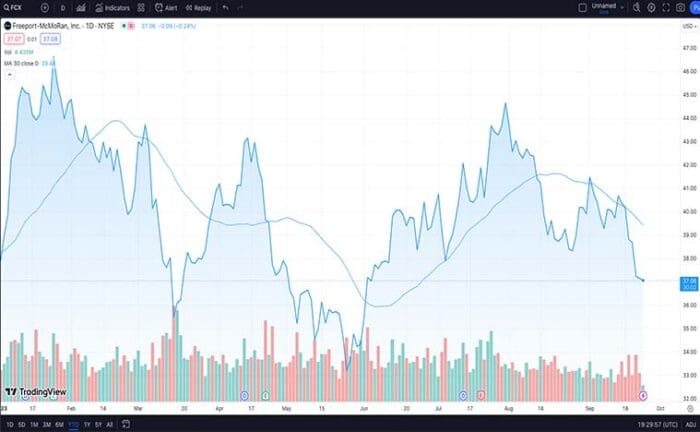
Freeport-McMoRan
Freeport-McMoRan is a major mining company with important copper operations. It also produces gold and other materials. Investors often follow the company because copper plays a central role in its business.
When researching Freeport-McMoRan, check its copper production, operating costs, cash flow, and debt. Also, review updates about its major mines and development projects. Production problems can affect its results, even if the wider copper market looks strong.
Southern Copper Corporation
Southern Copper Corporation operates copper mines and related facilities, with major operations in Mexico and Peru. It also produces other metals. Investors often examine its production costs, mine reserves, expansion plans, and dividend policy.
The company still faces risks linked to copper prices, government rules, labor relations, and operating conditions. Before buying its shares, read its latest financial statements and company announcements. Do not assume that a well-known name or a history of dividends guarantees future profits.
BHP Group
BHP is a large international mining company. Its business includes copper and other important resources. This broad mix gives investors exposure to several parts of the mining industry rather than copper alone.
When studying BHP, review its copper projects and the contribution of copper to overall earnings. Also, consider the performance of its other businesses. If another major commodity weakens, it may affect the company’s results even when copper demand remains healthy.
Rio Tinto
Rio Tinto is another major diversified miner. It produces several resources and has invested in copper projects. Its shares may appeal to investors who want a mining company with a broad portfolio.
However, Rio Tinto is not a pure copper investment. Its financial results also depend on other commodities and company-specific decisions. Therefore, check its latest production reports, capital spending, debt levels, and project updates before making an investment decision.
Glencore
Glencore operates in mining and commodity trading. Copper is an important part of its business, but it also has exposure to other materials and energy markets. Its trading activities make the company different from miners that mainly produce and sell their own metals.
Investors should review Glencore’s copper output, trading results, debt, and plans for its different businesses. They should also consider its exposure to coal and other commodities. A diversified company can offer several sources of income, but it can also face risks from many directions.
Teck Resources
Teck Resources has a significant copper business and operates in the mining sector. Its copper projects and production plans may interest investors who want to research companies with a strong connection to the metal.
Before investing, examine its current business structure, project plans, costs, and financial reports. Also, verify any recent merger or restructuring news using reliable sources. Corporate changes can affect the way investors should compare a company with its competitors.
What Makes Copper Company Stocks Rise or Fall?
Copper company stocks can move for several reasons. The copper price is one of the most important factors, but it is not the only one. Investors should understand how market demand, company costs, mine output, and world events can influence share prices.
Copper Prices
Copper prices can rise when demand grows faster than supply. They can fall when factories use less metal or producers supply more than customers need. Since mining companies sell copper, price changes can affect their revenue and profit.
However, a higher copper price does not guarantee a rising share price. Investors may already expect the increase, or a company may face higher production costs. Therefore, compare the copper market with the company’s own results before deciding whether its shares offer value.
Global Economic Growth
Copper demand often follows economic activity. When construction, manufacturing, and infrastructure projects grow, companies may need more copper. On the other hand, weak economic conditions can reduce demand and place pressure on prices.
China is an important part of the global metals market because it uses large amounts of industrial materials. Changes in Chinese construction, manufacturing, and infrastructure spending can affect copper demand. Investors should also watch economic activity in other major markets.
Supply Problems
Copper mines can face accidents, equipment failures, labor disputes, water shortages, or transport delays. These problems may reduce the amount of copper reaching customers. If supply tightens while demand remains strong, prices may rise.
Still, a supply problem can hurt the company that experiences it. A miner may lose sales and spend more money on repairs. As a result, the broader copper market may benefit from a disruption while the affected company’s shareholders suffer losses.
Production Costs
Mining requires equipment, electricity, fuel, workers, transport, and maintenance. When these costs rise faster than copper prices, profit margins can shrink. Companies with lower production costs may have more room to manage a market downturn.
Investors should compare production costs across similar businesses. They should also check whether costs have increased over time. A company that reports strong revenue may still struggle if it spends too much money to produce each pound or tonne of copper.
Government Rules and Politics
Mining companies need permission to operate. Governments may change taxes, royalties, environmental rules, or licensing requirements. These changes can affect costs and project schedules. Political unrest can also disrupt workers, transport, and supplies.
Therefore, review the countries where a company operates. Consider whether it depends heavily on one region. A miner with operations in several stable locations may face a different risk profile from one that relies on a single project in a politically uncertain area.
Copper Demand and Future Growth
Many investors watch copper because modern economies need more electricity and connected technology. Power networks, electric vehicles, renewable energy systems, and data centers all use copper. These developments may support demand over time, but actual results depend on costs, technology, policy, and economic conditions.
Electric Vehicles
Electric vehicles need copper in motors, wiring, batteries, charging systems, and related equipment. As more people and businesses adopt electric transport, demand for copper may increase. Charging stations and electricity networks also require new materials.
However, electric vehicle sales can change with prices, government support, interest rates, and consumer choices. New designs may also use materials more efficiently. Therefore, investors should treat electric vehicles as one demand factor rather than a guarantee of future growth.
Renewable Energy
Solar and wind projects need copper for electrical connections and power systems. Countries also need stronger networks to move electricity from where it is produced to where people use it. These projects can create demand for copper over many years.
Even so, renewable energy projects depend on funding, permits, equipment costs, and government policies. Some projects may face delays or cancellations. Investors should consider these limits when studying long-term forecasts for copper company stocks.
Data Centers and Artificial Intelligence
Data centers support cloud services, online platforms, and artificial intelligence tools. They require electricity, cooling equipment, and extensive electrical systems. Building and connecting these facilities can increase demand for copper.
Yet the size and speed of future demand remain uncertain. Technology companies may change their plans, improve efficiency, or delay projects. As a result, investors should avoid buying shares based only on excitement about artificial intelligence. Company earnings and valuations still matter.
Limited New Mine Supply
Building a new copper mine can take many years. Companies must explore deposits, study project costs, secure permits, arrange funding, and build facilities. If demand grows faster than supply, the market may face pressure to develop more mines.
However, new projects can be expensive and difficult to complete. Existing mines may also expand production or improve efficiency. Recycling can supply additional copper. Therefore, investors should compare long-term demand forecasts with realistic estimates of future supply.
Recent market coverage has highlighted both the long-term demand story and the risk of short-term price swings. For example, The Wall Street Journal discussed copper’s strong recent price performance alongside possible market distortions and price corrections. Read the report on copper prices and investment risks before relying on a simple shortage story.
How to Research Copper Company Stocks
Good research helps investors understand what they are buying. It also helps them avoid making decisions based only on social media posts or exciting headlines. Start with the company’s official reports and then compare the information with independent market research.
Check Revenue and Profit
Revenue shows how much money a company earns from selling products and services. Profit shows what remains after costs and expenses. Both figures help investors understand how the business performs.
Look at several years of results instead of focusing on one quarter. Check whether revenue and profit grow steadily or change sharply. Also, read company explanations for major changes. A single strong year may not reflect the company’s normal performance.
Review Debt and Cash Flow
Mining projects need large amounts of money. Companies borrow funds to build mines, buy equipment, or expand production. Debt can help a business grow, but too much debt can become a problem when prices fall.
Cash flow shows how money moves into and out of the business. Strong cash flow can help a company pay bills, reduce debt, fund projects, and return money to shareholders. However, investors should compare cash flow with upcoming costs and debt payments.
Study Production Costs
Production costs help show how efficiently a company operates. Lower costs can provide a useful advantage when copper prices decline. Higher costs may leave a miner with less money after paying its operating expenses.
However, cost figures can differ between companies. Some reports include certain expenses while others use different measures. Read the definitions in each report and compare similar figures whenever possible. Do not rely on one number without understanding what it includes.
Examine Mine Life and Reserves
A mine has a limited supply of economically recoverable copper. Companies study deposits and estimate how much metal they can extract under certain conditions. These estimates can help investors understand the possible life of an operation.
Still, reserve estimates can change. New exploration may add resources, while technical or economic problems may reduce the amount a company can recover profitably. Investors should read the company’s explanations and avoid treating reserve estimates as guaranteed future production.
Compare Company Valuations
A share price alone does not tell you whether a stock is cheap or expensive. A company with a low share price may still have a high valuation. Investors often compare measures such as price-to-earnings ratios, cash flow, debt, and expected growth.
Compare companies that have similar businesses and operating risks. A large diversified miner may deserve a different valuation from a small exploration company. Also, remember that valuation ratios can become less useful when earnings are unusually high or negative.
For a deeper look at financial analysis and mining risks, read this guide to analyzing copper mining stocks.
Benefits of Investing in Copper Company Stocks
Copper company stocks can give investors exposure to a metal used across many industries. This can make them interesting for people who want to study mining, infrastructure, and long-term industrial demand. However, the benefits depend on the company, its valuation, and market conditions.
Exposure to Industrial Growth
Copper supports construction, electricity, transport, and manufacturing. If these sectors grow, demand for copper may also increase. Well-managed mining companies may benefit when demand and prices support profitable production.
However, growth in the wider economy does not guarantee strong returns for every miner. A company can still suffer from poor management, rising costs, or production problems. Investors should examine the business instead of assuming all copper company stocks will perform alike.
Possible Dividend Income
Some established mining companies pay dividends to shareholders. A dividend is a payment that a company chooses to distribute from its earnings or available funds. It may provide income while an investor holds the shares.
However, dividends can change or stop. Mining companies may reduce payments when profits fall or when they need money for major projects. Check the company’s dividend history, financial strength, and current policy. Never choose a stock based only on a high advertised yield.
Different Ways to Invest
Investors can choose individual mining shares or funds that hold several mining companies. Some funds focus on miners, while others follow copper-related instruments. These choices offer different levels of company-specific and market risk.
Before investing in a fund, check what it owns, how it tracks its target, what fees it charges, and where it trades. A mining stock fund does not necessarily follow the copper price closely. The performance of its holdings also affects its returns.
Risks of Investing in Copper Company Stocks
Copper company stocks can experience large price swings. Even when copper demand looks promising, investors can lose money. Therefore, risk management matters as much as choosing a company with an interesting business.
Copper Price Volatility
Copper prices respond to supply, demand, economic news, and investor expectations. A sudden price drop can reduce a miner’s expected revenue. If the market already expects high prices, even good news may fail to push a stock higher.
Investors should prepare for both rising and falling markets. Avoid assuming that copper prices will keep moving in one direction. Consider how a company might perform if copper becomes cheaper than expected.
Mine Accidents and Delays
Mining operations involve heavy machinery, complex equipment, and challenging conditions. Accidents, breakdowns, weather, and technical problems can interrupt production. A delay at a major mine can affect sales and raise costs.
A company may also face extra spending to repair equipment or improve safety. Investors should read operational updates and check whether the business depends heavily on one mine. Multiple operations can reduce some risks, although they cannot remove every possible disruption.
Debt and Funding Problems
Mining projects can require large investments before they generate income. Companies may borrow money or issue new shares to pay for development. If a project costs more than expected, the business may need additional funding.
This can create pressure on shareholders. New shares may reduce each existing share’s ownership percentage. Heavy debt can also increase interest costs and limit future choices. Always review funding plans, debt payments, and cash reserves before investing.
Environmental and Community Issues
Mining can affect land, water, wildlife, and nearby communities. Companies need to manage waste, protect workers, and follow local rules. Poor environmental practices can lead to fines, legal claims, protests, or operating delays.
Community relationships also matter. A project may face problems if local people oppose its plans or believe the company has not addressed their concerns. Investors should review a company’s environmental policies and reports, while also checking how it handles real problems.
Currency and Political Risks
Copper companies operate in different countries and currencies. Changes in exchange rates can affect costs, reported profits, and debt payments. Government decisions can also change the rules under which mines operate.
These risks can be difficult to predict. Investors should study the countries where a company earns most of its income. They should also consider whether the business depends on one region, one transport route, or one major customer.
Copper Stocks Compared With Physical Copper
Buying a copper mining stock is not the same as owning copper itself. A mining share represents part ownership of a business. Its price reflects copper prices, company finances, operating risks, management decisions, and investor expectations.
Physical copper exposure or a copper-linked fund may track the metal more directly, depending on the product. However, each investment has its own costs and risks. Some funds use futures contracts, while others may hold different types of assets. Read the product documents before investing.
Mining stocks may rise faster than copper in some market conditions, but they can also fall much further. For example, a mine accident can hurt a company’s shares even when copper prices rise. Therefore, choose an investment based on your goals and understanding of the risks.
Copper Mining ETFs and Other Funds
An exchange-traded fund, or ETF, holds assets and trades on a stock exchange. Some ETFs invest in mining companies, including copper producers. Others aim to provide exposure to copper prices through a different structure.
A mining ETF can spread your investment across several companies. This reduces the effect of a problem at one business, although the whole sector can still decline. Check the fund’s holdings, annual fees, trading costs, and concentration in large companies.
Copper-linked funds can also behave differently from mining ETFs. A fund that uses futures may not match the spot price perfectly. Fees and the way contracts change over time can affect returns. Therefore, read the official fund documents and understand its method before investing.
Tips for Beginners Investing in Copper Company Stocks
Beginners should focus on learning before risking money. A simple plan can help you avoid rushed decisions and understand why a stock moves. You do not need to predict every copper price change to become a more informed investor.
- Start with established businesses: Their operating history and financial reports may make research easier than research into early-stage explorers.
- Read official reports: Check company announcements, annual reports, and production updates.
- Compare competitors: Study costs, debt, production, and valuation across similar companies.
- Understand the risks: Consider what could happen if copper prices fall or a major project fails.
- Avoid investing based on hype: Online excitement does not replace financial research.
- Spread risk carefully: Holding different types of investments may reduce dependence on one company or industry.
- Review your plan: Check whether your investment still matches your goals and risk tolerance.
Also, make sure you understand the fees and tax rules that apply to your account. These costs can reduce returns. If you invest from outside the country where a stock trades, check currency conversion charges and any restrictions that apply to foreign investments.
Common Mistakes to Avoid
One common mistake is buying a stock only because copper prices have increased. A rising metal price may already appear in the share price. Meanwhile, higher costs or a production problem may limit the company’s gains.
Another mistake is ignoring debt. A miner may own valuable resources but still struggle to pay its bills. Investors should examine cash flow and future spending, not just the size of a company’s copper reserves.
Finally, avoid putting all your money into one mining company or making decisions based on fear. Mining shares can be volatile. Take time to research, set sensible limits, and consider speaking with a qualified financial adviser if you need personal guidance.
The Future Outlook for Copper Company Stocks
The long-term outlook for copper depends on several forces. Electricity networks, renewable energy, electric vehicles, construction, and data centers may support demand. At the same time, miners need to maintain existing operations and develop new sources of supply.
However, long-term demand does not guarantee short-term stock gains. Copper prices can fall during economic slowdowns or when supply rises. Individual companies can also face delays, debt problems, and higher costs. Investors should review updated data rather than relying on old forecasts.
News reports can help explain changing market conditions. For instance, recent Reuters coverage of Glencore’s planned Australian listing discussed investor interest in copper exposure and electrification. Such reports provide context, but they do not replace company research or guarantee future returns.
Overall, copper company stocks may suit investors who understand the mining sector and can accept its risks. The best approach is to study each business, compare its valuation, and keep expectations realistic. Do not treat a popular trend as a promise of profit.
FAQs
1. What are copper company stocks?
Copper company stocks are shares in businesses that explore for, mine, process, or sell copper. Their prices can respond to copper prices, production costs, company profits, and market conditions.
2. Are copper company stocks risky?
Yes. Copper company stocks can rise and fall sharply. Mine problems, lower copper prices, debt, political changes, and higher costs can all affect returns.
3. Which companies produce copper?
Examples include Freeport-McMoRan, Southern Copper Corporation, BHP, Rio Tinto, Glencore, and Teck Resources. Their copper exposure differs, so investors should check each company’s latest reports.
4. Do copper mining companies pay dividends?
Some established mining companies pay dividends. However, payments can change or stop. Investors should review the company’s dividend policy, earnings, cash flow, and financial position.
5. Can beginners invest in copper company stocks?
Beginners can research and invest in copper company stocks through a suitable broker. However, they should first learn how stocks work, compare company finances, understand fees, and consider the possibility of losing money.
Conclusion
Copper company stocks provide one way to invest in the mining industry and explore the possible effects of growing copper demand. The metal supports many important industries, including construction, electricity, transport, and technology. These uses may create opportunities, but they do not guarantee success for every mining company.
Before investing, study the company’s profits, debt, production costs, mine plans, and valuation. Also, consider copper price changes, political risks, environmental issues, and market conditions. Compare several businesses instead of relying on one name or headline.
In the end, careful research and sensible risk management matter more than excitement about a popular metal. Copper company stocks may offer opportunities, but every investment carries risk. Make decisions based on reliable information and your own financial goals.
